

Amazon announced during its annual Accelerate seller conference that sellers will be able to manage their eBay, Shopify, TikTok Shop, and Walmart businesses from inside Seller Central. Its new multichannel selling tools are rolling out gradually to U.S. sellers at no extra cost, and they pull listings, orders, and profitability from every connected channel into one workspace. The launch is the latest step in a five-year sequence that has taken Amazon from a platform whose policies made selling elsewhere harder to one that powers it.
Five years ago, Amazon was the roadblock of multi-channel commerce. FBA charged more to ship off-Amazon orders, and unbranded packaging was still in beta. Products priced lower elsewhere could be suppressed, as they still can today. The following spring came Buy with Prime, which merged Amazon’s checkout and fulfillment for independent websites. At Accelerate 2024, Amazon said Multi-Channel Fulfillment served more than 200,000 U.S. sellers and its order volume had grown 70%. At last year’s event, it announced MCF integrations with Walmart and Shein.
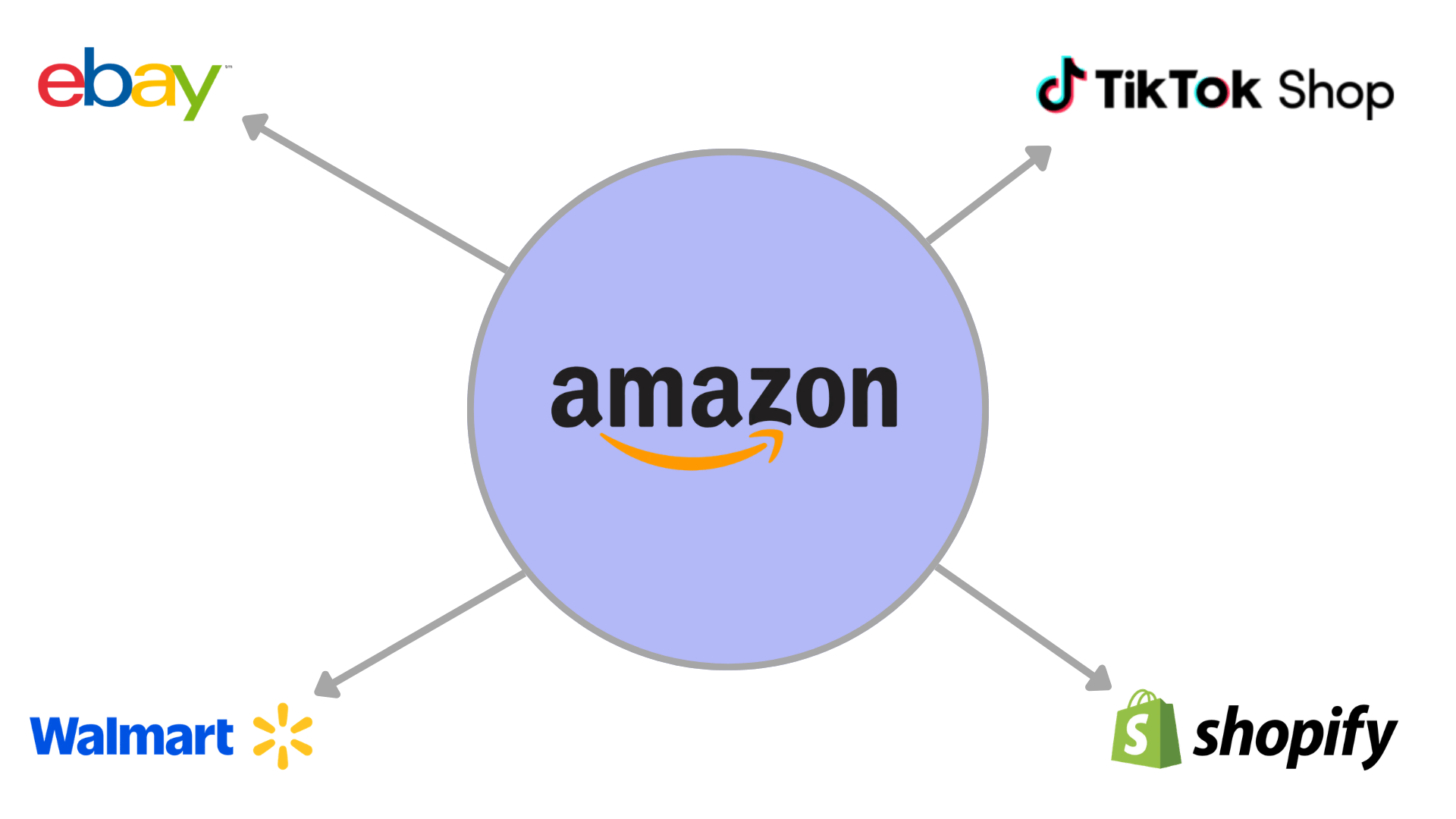
Each of those steps handled goods or payments. Amazon was the warehouse behind other channels, and it dropped out of the seller’s workflow once an order shipped. The new tools put Amazon in front of those channels instead. A seller edits a product description once, and Amazon reformats and publishes it to the product’s linked listings on eBay, Walmart, and Shopify. Shopify and Walmart orders appear alongside Amazon’s and can be fulfilled through Amazon in a few clicks. A profitability view shows what each product earns on each channel. Amazon has long tracked what its sellers charge elsewhere. Now it can also see how much they sell there, though it says the data won’t inform its retail business.
Unlike the earlier steps, this one earns Amazon nothing directly. An MCF order from Walmart is Amazon revenue generated by Walmart’s customer, but the multichannel tools are free and work whether or not a seller ships through Amazon. Amazon is betting that owning the hub matters more than how a seller’s revenue splits across the spokes, and its sellers’ behavior supports the bet. Amazon says more than 95% of its sellers sell on multiple channels, but selling on several channels rarely means being diversified. According to Marketplace Pulse’s 2026 Seller Index, 71% of Amazon-primary sellers active on at least one other marketplace still earn three-quarters or more of their marketplace revenue from Amazon.
By making other channels easier to operate, the tools may help some sellers grow faster on Walmart or TikTok Shop. Amazon can afford that, because the growth happens inside its software and because growth elsewhere tends to flow back. For sellers, the risk is deeper dependence on a channel that the Seller Index shows many are working to rely on less. The tools make it easier to run other channels, but those channels still orbit Amazon.


